
If you are finding clusters of gray, spotted insects on your trees, your deck rail, or the side of the house, North Brunswick has a spotted lanternfly problem and you are seeing it firsthand. We are Aspenn Environmental Services, based right here in town, and we treat spotted lanternfly on the trees and surfaces where it gathers. This pest does not bite people or pets, but it feeds on sap in large numbers, weakens the trees it swarms, and coats everything underneath in sticky honeydew that turns black with sooty mold. Left alone, a few become hundreds by late summer.
We treat the problem where it actually lives, on the host trees and the trunks the insects climb, and we time the work to the stage the lanternfly is in when we arrive. Because every county in New Jersey now sits under a state quarantine, getting the population down on your own property also keeps you from carrying egg masses to your next destination.
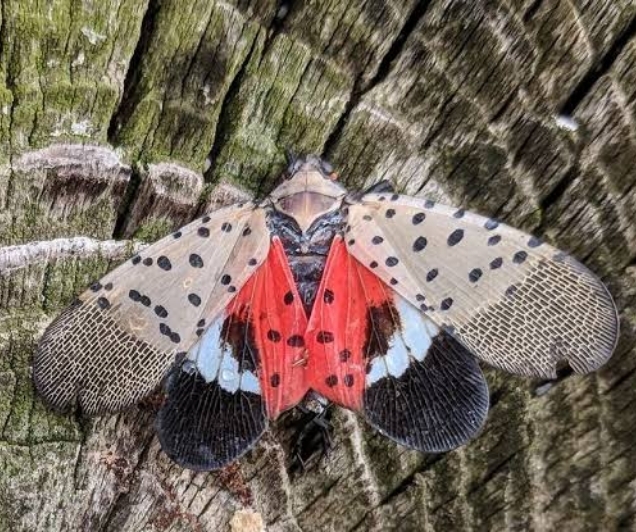
Spotted lanternfly does not fly long distances on its own. It spreads by hitching rides, and North Brunswick hands it two of the best travel routes in central New Jersey. Route 1 and Route 130 run straight through town with steady truck and car traffic, and the Northeast Corridor rail line cuts through as well. Lanternfly egg masses get laid on flat surfaces like trailers, rail cars, pallets, patio furniture, and firewood, so a busy road and rail town collects new arrivals every year.
Once here, they look for their favorite food. The tree-of-heaven, an invasive weed tree that grows fast along roadsides, rail lines, fence rows, and neglected edges, is the lanternfly’s preferred host, and it is common on exactly the kind of disturbed ground that lines our corridors. From those staging trees, the insects move into yards and feed on maples, willows, birches, fruit trees, grapevines, and ornamental plantings. A North Brunswick property near a road edge, a rail line, or a stand of tree-of-heaven tends to see the heaviest pressure.
The damage is not dramatic bites or holes, it is slow drain and mess. Lanternfly nymphs and adults pierce bark and stems and drink sap, and when dozens or hundreds feed on the same tree, they sap its strength, stress it through the season, and leave it more open to other problems. Grapevines and young or already-stressed trees take the worst of it.
Then there is the honeydew. As they feed, lanternflies excrete a sugary liquid that rains down onto whatever sits below: decks, patios, cars, play sets, and the lower plants. That honeydew grows a black sooty mold and draws in wasps, ants, and other insects looking for the sugar. Homeowners often call us less about the trees and more about the sticky black film taking over the patio they can no longer use. Both problems trace back to the same feeding, so both ease when we bring the population down.

The damage is not dramatic bites or holes; it is a slow drain and mess. Lanternfly nymphs and adults pierce bark and stems and drink sap, and when dozens or hundreds feed on the same tree, they sap its strength, stress it through the season, and leave it more open to other problems. Grapevines and young or already-stressed trees take the worst of it.
Then there is the honeydew. As they feed, lanternflies excrete a sugary liquid that rains down onto whatever sits below: decks, patios, cars, play sets, and the lower plants. That honeydew grows a black sooty mold and draws in wasps, ants, and other insects looking for the sugar. Homeowners often call us less about the trees and more about the sticky black film taking over the patio they can no longer use. Both problems trace back to the same feeding, so both ease when we bring the population down.
New Jersey now runs a statewide spotted lanternfly quarantine covering all 21 counties, Middlesex included. For a homeowner the quarantine is mostly a reminder to check before you move things: firewood, plants and plant parts, outdoor furniture, grills, trailers, and vehicles can all carry egg masses or hitchhiking adults out of the area. Businesses that move goods within or out of the quarantine zone need a state permit.
The practical takeaway is simple. The state is asking residents and companies to stop the spread, and treating the lanternfly on your own trees is part of that. When you knock down the population feeding in your yard and clear the egg masses off your trunks and furniture before winter, you protect your own trees and you keep from seeding the next neighborhood. We can walk your property, show you where the egg masses are hiding, and treat the feeding insects at the same time.
We live and work in North Brunswick, so we already know where the pressure comes from here: the road and rail corridors, the tree of heaven along the edges, and the yard trees these insects move onto next. That means we are not guessing at your property. We look at your actual trees, judge the stage the lanternfly is in, and treat to match rather than handing every house the same spray on the same date.
With more than 30 years in this town and thousands of reviews behind us, we treat spotted lanternfly as part of the same seasonal care that covers mosquitoes and ticks on a wooded North Brunswick lot. Many neighbors bundle the three, since the trees drawing lanternflies often sit right next to the shaded edges feeding ticks. Start from the full North Brunswick pest control plan, or pair this with tick control in North Brunswick.

Our work centers on the trees and trunks where lanternflies concentrate, not a blanket spray of the whole yard. We treat the host trees they are feeding on and climbing, deal with egg masses where we find them, and can address a tree-of-heaven acting as a magnet on or near your property. We build the plan around your specific trees and how heavy the pressure already is.
Show us the trees they are swarming and we will match the treatment to the season.
No. Spotted lanternfly does not bite or sting people or pets and it is not toxic. The harm is to trees and plants it feeds on, and to your outdoor living space, because the honeydew it drops grows black sooty mold on decks, patios, and cars underneath.
North Brunswick sits on the Route 1, Route 130, and Northeast Corridor rail routes, and lanternfly spreads by hitching rides and laying eggs on flat surfaces. If you have tree-of-heaven or favored host trees like maple and willow near a road or rail edge, your property becomes a feeding site.
Their preferred host is tree-of-heaven, an invasive weed tree common along our roadsides and rail lines. From there they feed on maples, willows, birches, fruit trees, grapevines, and ornamental plantings. Grapevines and young or stressed trees tend to take the most harm.
It depends on the stage. We treat nymphs and adults through the feeding months from spring into fall, and we address egg masses in fall and winter so next season starts smaller. A property treated across the season, and again the following year, usually sees the biggest drop.
That is sooty mold growing on honeydew, the sugary liquid lanternflies excrete as they feed. It coats decks, patios, cars, and lower plants and draws in wasps and ants. It clears up as we bring the feeding population down.
Mostly as a heads-up. All 21 New Jersey counties are quarantined, so check firewood, plants, outdoor furniture, trailers, and vehicles for egg masses before moving them out of the area. Businesses that transport goods from the zone need a state permit.
Sometimes, but not always on your own. Tree-of-heaven is the lanternfly’s magnet, so managing it helps, though cutting it wrong can make it resprout aggressively, and a few treated trees-of-heaven can even work as trap trees. We will look at what you have and recommend the right move for your property.
We treat spotted lanternfly across the whole town, from Adams and Franklin Park to Livingston Park, Maple Meade, and Red Lion, with extra attention to properties near the road and rail corridors. If you do not see your street named, just call. We are based right here.