
North Brunswick is home for us. Our office sits at 1430 Jersey Avenue, off US 1, and this is the town we drive through every day, so when we say we know where the ticks are here, we mean the actual streets, not a name on a map. We are Aspenn Environmental Services, and we have spent more than thirty years pulling blacklegged ticks, the deer ticks that carry Lyme disease, off the wooded south and east edges of our own hometown. Tick control in North Brunswick means walking your property, finding the shaded, leaf-covered borders where these ticks wait, and treating those bands so your family and dog can use the yard without carrying a passenger back inside.
Being based here changes how we work. We are not driving in from another county to guess at your yard. We already know which residential edges back onto trees, which lots sit against the parkland off Route 130, and how the deer that cut through those wooded corners drop ticks along the way. We build the plan around the real pressure your address faces, because ticks never spread evenly across a town. They pile up where the woods meet the mowed grass, and that is exactly where we aim.
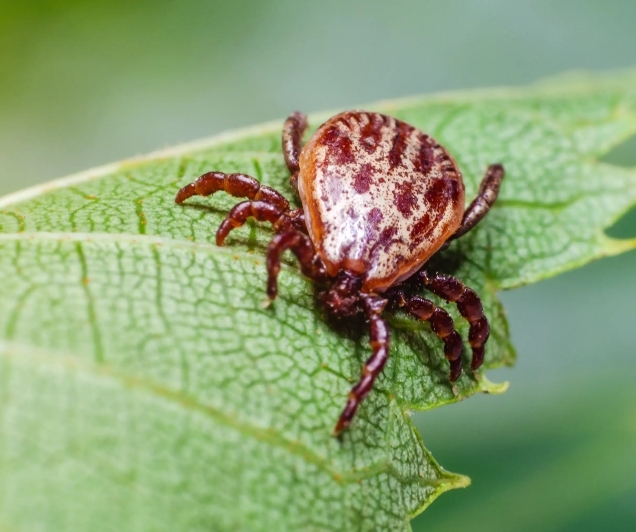
North Brunswick reads as two different towns when you look at it through a tick’s eyes. The middle and north end, near the older grid along US 130, is denser and more open, which keeps tick pressure lighter. The south and east residential edges are the opposite. Those are the tree-shaded lots where mature canopy, ornamental beds, and leaf litter run right up to the fence line. Blacklegged ticks do not last long in open, sunny turf. They do best in the humid, shaded, leaf-covered ground that those wooded residential borders hand them.
Our own back yard anchors the picture. North Brunswick Community Park, about 105 acres off Route 130, is the biggest block of trees and trail edges in town, and it works as a permanent tick reservoir. Deer and rodents move out of that parkland and along the wooded residential edges nearby, carrying ticks into yards as they browse. Add a resident deer population with few predators and little suburban hunting to thin it, and the south and east sides of North Brunswick check every box a blacklegged tick needs. The deer that slip through your back corner at dusk are the same ones seeding the grass with next season’s ticks.
New Jersey is a high-incidence Lyme state. Recent years have run near 69 confirmed cases per 100,000 residents, and in 2023 the state posted the fourth-highest case count in the country. The tick behind almost all of that is the blacklegged tick, Ixodes scapularis, and it is the same tick working the wooded edges of North Brunswick. Middlesex County carries genuine Lyme numbers, and while it is not the heaviest county in the region, the risk on a wooded lot near the community park or the south-side tree lines is real, not theoretical.
Deer are the engine that keeps the ticks coming. A single adult female tick feeds and mates on a deer, then drops off to lay thousands of eggs, so wherever deer browse freely, tick numbers climb. North Brunswick does not run a formal county deer cull, so the deer that travel out of the parkland and along the wooded residential edges keep dropping ticks into backyards. We cannot change how many deer move through town, but we can treat the yard edges where they travel and where their ticks end up questing for the next host. For a North Brunswick homeowner, that is the practical lever you actually control.

Because this is our hometown, we tend to already have a feel for your street before we pull up, but the visit still follows the same honest sequence.
We walk the whole yard and flag the tree lines, beds, stone walls, and leaf litter where blacklegged ticks stage, giving the community park side and any south-side wooded edge extra attention.
We trace the host traffic, the deer and rodent paths coming off the parkland and the residential tree lines, since a lot fed by those trails needs a heavier plan than a plain interior lot.
We spell out the treatment, what to expect after, and the price, all up front and in plain language.
We put the product where the ticks actually are, the shaded transition ground and harborage, and skip the open lawn they never use.
We lock in a return rhythm covering the late-spring nymph peak and the fall adult surge, so the yard stays usable right through tick season.
Ticks stay a problem here for most of the year, and reading the rhythm helps you time your defense. The sharpest risk runs from late spring into midsummer, roughly late May through July, when the nymph stage of the blacklegged tick is out. A nymph is about poppy-seed size and slips by unnoticed, which is why nymphs are behind the majority of human Lyme cases. That stretch also happens to be when kids are barefoot in the grass and dogs are nosing the tree line daily.
The adults then take over in fall, return in early spring, and will climb a grass blade on any mild winter afternoon. So a North Brunswick yard near the parkland tree line or a south-side wooded edge can produce a tick in nearly any month. We front-load the treatment on the late-spring and summer nymph window, then carry protection into the fall adult surge, so the two peaks that matter most never catch your property unguarded.
We are headquartered right here in North Brunswick, and we have treated ticks in this town for more than thirty years. This is our home turf in the literal sense: we know which streets back onto the parkland, which south-side lots sit against a wooded edge, and how those borders behave in a wet June. That local knowledge means we are not guessing at where your ticks are coming from, and it means a North Brunswick call is a short drive for us, not a road trip.
Homeowners also lean on our track record. Aspenn is BBB accredited and has earned thousands of reviews across our service area for showing up, treating the real problem, and standing behind the work. When your yard backs onto the woods and you want to send the kids and the dog outside without a tick check every single time, we build the plan around your address and the specific edges that put ticks in your grass.
The same wooded lots that hold ticks also sit near the standing water that breeds mosquitoes, so many neighbors treat both. See our mosquito control in North Brunswick, or start from the full North Brunswick pest control plan.

Our work zeroes in on the transition zones on your property, the seams where the mowed lawn gives way to woods, beds, stone walls, and leaf litter. Those seams are where nymphs and adults perch and wait for a host, so that is where a targeted treatment pays off. We hit the perimeter and the shaded harborage instead of soaking the open turf the ticks were never using anyway.
A lot of North Brunswick homes are fighting fleas too, carried in by the same wildlife and pets that deliver the ticks, so our combined tick and flea option clears both in one stop. If you back onto trees, spotted lanternfly turns up as its own seasonal headache and we can treat it on the same trip. Exact service scope and pricing are set after we see your property.
Tell us where the yard meets the woods and we will build the plan around those edges.
The wooded south and east residential edges carry the most pressure, especially the tree-shaded lots near North Brunswick Community Park and the south-side tree lines. Blacklegged ticks need humid, shaded, leaf-covered ground, which those mature-canopy properties provide. The more open neighborhoods toward US 130 usually see less, though any yard with a wooded corner can host ticks.
It does. Our office is at 1430 Jersey Avenue, right in town, so North Brunswick is our home turf and a quick drive rather than a trek from another county. We already know how the local wooded edges and the community park tree line behave through the season, so we show up prepared for your specific address instead of learning the town on your dime.
A fair number do. The blacklegged tick, the deer tick, is responsible for nearly all Lyme disease in New Jersey, and it is the exact species working North Brunswick’s wooded edges. With the state ranking high for Lyme incidence, a tick off a wooded lot here is worth treating as a genuine hazard rather than a passing annoyance.
Late May through July is the peak, when the tiny nymphs are questing and slip by unseen. The adults then run the fall and early spring and will surface on mild winter days. Between the two, a wooded North Brunswick yard can hand you a tick in nearly any month, which is why our coverage spans the whole season instead of one visit.
In the long run, yes, because adult ticks depend on deer to feed and breed, so a smaller herd eventually means fewer ticks. North Brunswick runs no formal county cull, though, and thinning deer only lowers tick density rather than removing Lyme risk. The step you can take now is treating the yard edges the deer travel and seed with ticks.
Yes, and those are exactly the properties that benefit most. The parkland off Route 130 is a large block of trees and trail edges, and it carries the deer and rodents that ticks ride on, so lots backing onto it get concentrated pressure. We focus the treatment on your transition zones, the shaded edges where the woods meet your lawn.
Usually not, since blacklegged ticks avoid short, sunny turf. They stage in the shaded edges, beds, leaf litter, and stone walls where the lawn runs into woods. We put the product on those harborage zones instead of soaking the open grass, which is exactly where a tick treatment earns its keep.
Yes. The same wildlife and pets that carry ticks into a North Brunswick yard bring fleas too, so we commonly run tick and flea control together. Clearing both in one plan keeps the shaded edges and the pet paths covered at once.
We treat all of North Brunswick, from Adams and Franklin Park to Livingston Park, Maple Meade, and Red Lion, and we are based right here in town off US 1. If you do not see your section listed, just call. Odds are we are already treating ticks on your street.