
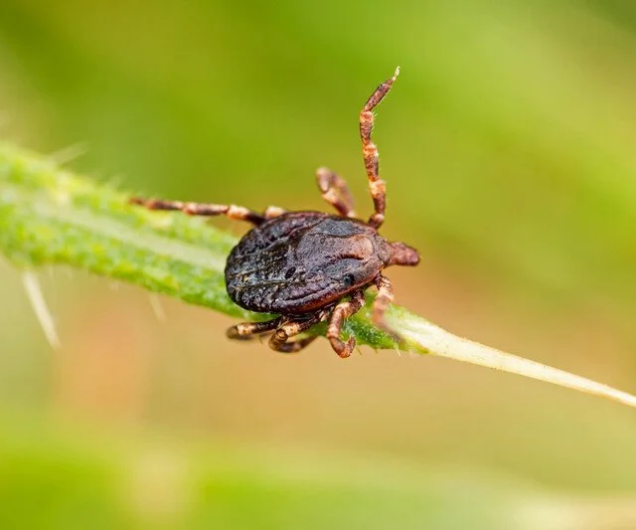
Worried about your family contracting tick-borne illnesses or being bitten by fleas? You don’t have to be. To ensure that your yard is free from ticks and fleas all year round, we use the number-one treatment recommended by the University of Rhode Island Tick Awareness Center.
Our tick control services includes deer ticks that carry Lyme and other diseases, and fleas, but are also used to combat ants, spiders, crickets, sod webworms, mole crickets, armyworms, fire ants, bees, carpenter bees, bark beetles, borers, boxelder bugs, centipedes, cockroaches, Asian cockroaches, crickets, mole crickets, earwigs, elm leaf beetles, firebrats, ground beetles, gypsy moths (adults and caterpillars), millipedes, scorpions, silverfish, sowbugs, spiders, wasps, ticks & mosquito, flies, carpenter ants, chinch bugs, pill bugs, sod webworms, and many more common insects.
We follow a five-step process for tick prevention and tick control:
Ticks are tiny, blood-feeding parasites found throughout America, but especially in the northeastern United States. They carry diseases like Lyme disease, babesiosis, and Rocky Mountain spotted fever, which can be serious health risks to you, your family, and your pets.
Fleas are blood-feeding parasites, too. And while they don’t carry the kinds of diseases ticks do, they can infest your house quickly and leave your family in misery.
The worst part about ticks and fleas? These tiny, yet potentially dangerous creatures crawl around in places you’d like to think are “safe”—places like your backyard.
While there are ways we can help you combat and prevent ticks and fleas yourself, combining DIY treatments with professional treatments will ensure a highly effective strategy—one that is safe for your entire family.