
Edison is not a town of sweeping lawns, but the patches of grass between the driveways still get grubs, and in a place this tightly built that is its own kind of trouble. When the white, C-shaped larvae chew the roots under one lawn on the block, the beetles they become do not travel far to lay the next round of eggs, so a single untreated yard on a close-packed Edison street can seed the lawns on either side. We are Aspenn Environmental Services, based minutes away in North Brunswick, and grub work here is about timing the treatment to the calendar and reading how the pressure moves from lawn to lawn.
The first clue is usually damage you can lift with your hand: a patch of turf that peels back like a loose mat because the roots underneath are gone. The second is the digging, skunks, raccoons, and crows tearing at the grass overnight to get at the grubs, and Edison has no shortage of that wildlife working its neighborhoods after dark.
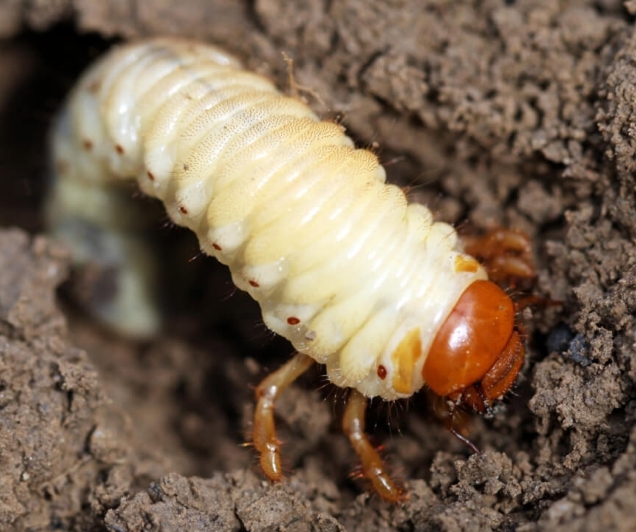
Grubs do not appear out of nowhere. They start as beetles, the adult oriental beetles and Japanese beetles that feed and breed through early summer, and those adults are drawn to the unmowed grassy edges, the park turf, and the greenway strips scattered through Edison. From that rough ground they move onto the tidy residential lawns nearby to lay their eggs, and the tidier and better-watered the lawn, the more attractive it is as a nursery.
Density is what makes it stick here. On a street where the houses sit close and the lawns are small, the beetles only need a short hop from one yard to the next, so the eggs get spread across the block in a single season. That is why grub damage in Edison tends to show up in clusters, a run of lawns down one side of a street, rather than a single isolated yard. Treating your patch while the pressure keeps arriving from next door is a losing game, which is why we look at the block, not just your property line.
Catching grubs early saves the lawn, so here is what we look for on an Edison property. Brown, dying patches that spread through late summer and stay brown no matter how much you water are the classic sign because the grubs have severed the roots that carry that water. Grass that feels spongy underfoot or that rolls up when you tug it confirms it. And the overnight digging from skunks and raccoons is often the loudest alarm, since the wildlife finds the grubs before most homeowners do.
If a neighbor is already fighting brown patches or torn-up turf, treat that as your early warning. On Edison’s close streets, last year’s grub lawn is a strong predictor of this year’s grub lawn two doors down.

Grub control in Edison works or fails on the calendar. The window for prevention is late June through mid-July, when the beetles are laying and the new grubs are small and feeding near the surface. Hit that window and you stop the damage before it starts. One detail decides whether it works: the treatment has to be watered in so it reaches the root zone where the grubs are, and a product left dry on top does almost nothing.
By late August into September the grubs are large and much harder to reach, which is exactly when most people first notice the brown patches and the digging. We can still treat then, but it is a rescue rather than prevention, and damaged turf on a small Edison lot may need reseeding. The honest version: the best time to deal with grubs here is before you can see them.
Our plan leads with prevention timed to that early-summer window, watered in so it reaches the grubs, and matched to the beetle mix on your lawn. Because Edison blocks share their pressure, we will tell you plainly if the reinfestation is coming from next door and what that means for holding your own turf. Where damage has already started, we assess whether a late treatment still helps and are straight about what it can and cannot bring back.
We have cared for lawns in this part of Middlesex for more than 30 years, so we know the Edison grub calendar without guessing, and with grubs the calendar is everything. We treat in the window that counts, we water the product in, and we watch for the species that beat the wrong treatment. Being based just next door in North Brunswick means an Edison lawn is a short drive, not a road trip, so we can get out while the timing still matters.
We are BBB accredited with thousands of reviews across our service area. Grubs also travel with the other yard pests we handle, and the same small Edison lawns that feed grubs often send ants toward the house, so many neighbors pair the two. Add ant control in Edison, or start from the full Edison pest control plan.

Several beetles produce the white grubs that damage New Jersey lawns, and they matter because their timing and weak points differ. The oriental beetle is the most common turf grub in this part of the state, with the Japanese beetle, the Asiatic garden beetle, and the northern masked chafer close behind. One practical wrinkle: the masked chafer shrugs off some of the products that handle the others, so a lawn where it dominates needs the treatment matched to it. The full method sits on our treatment page, and we bring the right one to your lawn.
Tell us what your lawn is doing and we will time the treatment to beat the damage.
Look for brown patches in late summer that stay brown despite watering, then tug the turf. If it peels up like a loose mat because the roots are gone, and you find white C-shaped larvae in the soil, grubs are the cause. Overnight digging by skunks or raccoons is another strong sign.
The prevention window is late June through mid-July, when the beetles are laying and the young grubs sit near the surface. Treating then, and watering the product in, is far more reliable than waiting for damage to show in late August or September.
On Edison’s close blocks the adult beetles only hop a short distance to lay eggs, so the pressure spreads yard to yard in one season. Damage tends to cluster along a run of neighboring lawns, which is why we look at the block, not just your own property line.
Skunks, raccoons, and crows dig for grubs as food, and Edison neighborhoods have plenty of that wildlife. If the digging shows up in late summer and you find grubs in the soil, they are the target. Bringing the grub numbers down removes the reason the animals keep tearing at the turf.
Sometimes, but it is a rescue rather than prevention. A late treatment can stop further feeding, though badly damaged turf on a small lot may still need reseeding, and results are less certain than treating in the early window. We will look at the lawn and give you the honest read.
The product needs to move down through the thatch to the root zone where the young grubs feed. Watering carries it there. Left dry on the surface it never reaches them, which is why so much do-it-yourself grub control fails.
No. The oriental beetle, Japanese beetle, Asiatic garden beetle, and northern masked chafer all cause white grubs, and the masked chafer in particular resists some products that work on the others. We match the treatment and the timing to the beetles on your lawn rather than using one blanket approach.
We treat lawns across the whole township, from Menlo Park and Stelton to Clara Barton, Oak Tree, and Bonhamtown. If you do not see your street named, just call. We are based right next door in North Brunswick and already working Edison.