
Edison is the sixth-largest municipality in New Jersey, with roughly 107,000 people packed onto tight lots across Menlo Park, Stelton, Clara Barton, Oak Tree, and Bonhamtown, and that density is exactly why the ant you fight here is usually the pavement ant. Wall-to-wall driveways, sidewalks, patios, and slab foundations give this species mile after mile of exactly the hardscape it nests under, and every expansion joint is a doorway to your kitchen. We are Aspenn Environmental Services, one town over in North Brunswick, and we treat ants by hitting the nest and the perimeter because the few crossing your counter are scouts, and the colony you never see is what keeps sending them.
We identify what you actually have, find where it nests, and treat the source so the trail does not simply reopen next week. The detailed control method sits on the treatment page linked below.
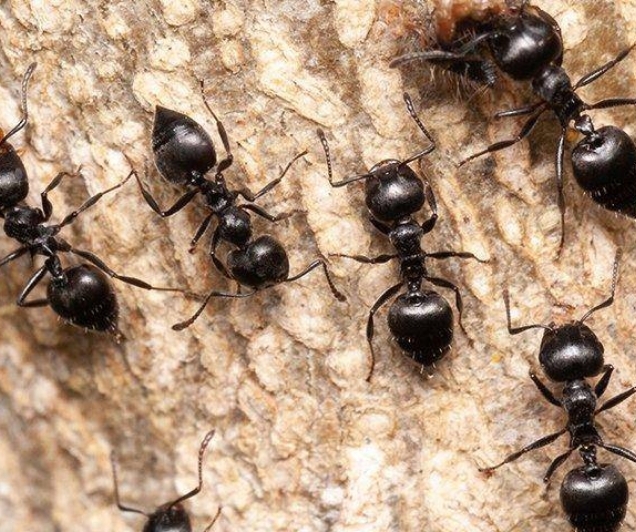
Density writes the ant story here. A township this built-up is mostly hardscape, and pavement ants are the dark brown to black ants that live for it. They nest under driveways, sidewalks, patio pavers, and slab foundations, and you spot them by the little volcano-piles of pushed-up soil in the seams and cracks. In Edison’s older sections the slabs and walks have had decades to settle and crack open new gaps, and in the newer slab-built developments the ants get fresh hardscape pressed right against the house. Either way, the expansion joint between your driveway and your foundation is a highway they run straight to the kitchen for grease and sweets.
Tight lots make it worse. When houses sit close together, colonies trade back and forth between neighboring properties, so one treated yard next to an untreated one keeps getting re-fed from over the fence. That is why we read the whole perimeter, not just the crack where you see the line. On an Edison lot the ants almost always come up through the hardscape, and stopping the counter trail means finding the joint they are using and closing the road behind it.
Pavement ants dominate, but two others turn up on Edison calls. Odorous house ants are the small dark ones that stream toward anything sweet and give off a rotten-coconut smell when crushed. Their colonies split into satellite nests and push indoors after heavy rain, so in Edison’s close-set homes they are the classic sudden counter trail.
Carpenter ants are the large black ones, and they are the group to take seriously. They do not eat wood, but they hollow out moist or damaged wood to nest, so they show up where there is a roof leak, a damp window frame, a wet bathroom wall, or wood sitting against soil. Edison’s older housing stock, with decades for small leaks to open damp pockets, gives them the conditions they want. Telling the three apart matters because the fix for pavement ants under a slab is nothing like the fix for carpenter ants in a wet wall, and we identify the species before we treat.

We start by naming the ant, because pavement, odorous house, and carpenter ants each nest and behave differently. Then we trace the trail back to the nest or the entry joint, checking slabs, foundation cracks, expansion joints, damp wood, and the perimeter where plantings meet the house. We treat the colony and the exterior perimeter with a method matched to the species, so the whole nest is affected rather than just the workers on the counter. Where moisture is driving carpenter ants, we flag the leak or damp wood that has to be fixed, because no product outlasts a wet nesting site. Then we set a schedule that carries through the season, since the colonies rebound every warm year.
Thirty years across central Middlesex teaches you a township’s houses. We know Edison’s settled older slabs that crack open new gaps and the newer slab developments where pavement ants run fresh hardscape, so we usually have a read on what you are fighting before we finish the perimeter walk, and we treat the actual species instead of guessing.
We are BBB accredited, we have thousands of reviews across our service area, and we are based right next door in North Brunswick, so a call in Edison is a short trip. Ants travel with other perimeter pests, and the same low, damp yard edges that feed ants can breed mosquitoes, so many neighbors handle both together. Pair this with mosquito control in Edison, or start from the full Edison pest control plan.

Ant pressure follows the warm months and the wet ones. The first big wave comes in spring, when colonies wake, swell, and send foragers out, which is when homeowners suddenly find trails that were not there in February. Carpenter ant swarmers, winged and easy to mistake for termites, also appear in spring, and finding them indoors points to a nest inside the structure.
Summer keeps activity high, and this is where Edison’s density bites. When a heavy rain floods the countless nests packed under all that pavement, the ants have nowhere to go but up and in, so a wet stretch drives a fast indoor push across the township. Activity eases as the weather cools, though carpenter ants in a heated wall can stay busy later than you would expect. Because the colonies rebuild every warm season, a perimeter plan that carries through spring and summer holds far better than one interior spray in April.
Homeowners near Edison also read our guides to pest control in North Brunswick and pest control in East Brunswick.
Tell us where you are seeing the trails and we will track them back to the nest.
Those are almost always pavement ants, the species that owns a dense, hardscape-heavy town like Edison. They nest under driveways, sidewalks, and slabs and push up little soil piles in the cracks, then follow the expansion joints indoors for food. We treat the nests under the hardscape and the perimeter they travel.
The ants you see are scouts from a colony nesting nearby, often odorous house ants chasing sugar. Wiping the trail clears the scouts, not the nest, so they return. We locate and treat the colony and its entry point, which is what actually stops the trail.
They are large and black, and big black ants indoors, spring swarmers, or small piles of sawdust-like shavings point to them. They nest in moist or damaged wood, so a leak or damp frame is a strong clue, and Edison’s older homes give them plenty. Treat them promptly.
Edison is dense, so a huge number of nests sit packed under pavement. When heavy rain floods them, the ants push up and indoors fast, and a close-set township feels that surge quickly. A perimeter plan through the season keeps that push outside.
It depends on the species and nest. A targeted treatment knocks a colony down fast, but ants rebuild from outdoor nests every warm season, so recurring perimeter service is what holds long term. We are honest about what a single visit can and cannot do.
For carpenter ants, usually yes: a leak, damp frame, or wood against soil has to be corrected or they return. For pavement and odorous house ants, clearing food sources and sealing obvious gaps helps the treatment last longer.
We apply products to label and place them where ants travel, focusing on the perimeter, cracks, and nest zones rather than open living space. Tell us about children, pets, or sensitivities and we plan the treatment around them.
We handle ants across the whole township, from Menlo Park and Stelton to Clara Barton, Oak Tree, and Bonhamtown, in both older homes and newer slab developments. If your street is not named, just call. We are one town over.