
Spotted lanternfly barely flies, so it reaches a town by hitching a ride, and Short Hills sits on one of the busiest ride-sharing corridors in the county. Route 24, JFK Parkway, and the Mall at Short Hills move a constant stream of vehicles, trailers, and deliveries through Millburn, and every one of them can carry an egg mass or a stray adult onto a property. We are Aspenn Environmental Services, and our lanternfly work stays on the trees and trunks where the insects gather. They are harmless to people and pets, but a heavy population drains a tree of sap all season and leaves the terrace and the cars below it coated in sticky honeydew.
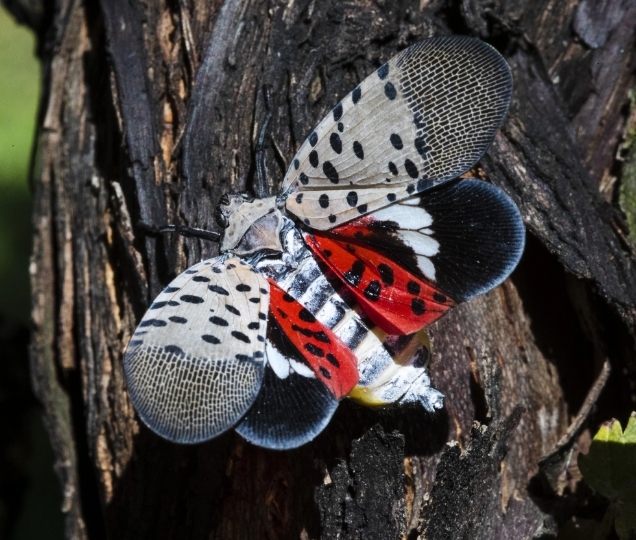
Left to itself the insect hops more than it flies, and it spreads by catching a lift. Egg masses stick to flat surfaces, a car roof, a landscaper’s trailer, a delivery pallet, a piece of stored patio furniture, and a corridor as busy as Route 24 and the Mall keeps that traffic flowing past every estate driveway in Millburn. Once it drops off, it looks for a host and starts on tree-of-heaven, the aggressive weed tree that colonizes roadsides, rail edges, and neglected back corners, and a commercial corridor has plenty of it.
From that first foothold it moves onto the ornamental and shade trees that a high-end property is full of. What sets Short Hills apart is the quality of the target: estate grounds carry specimen maples, mature plantings, and prized ornamentals that took decades to establish, so a lanternfly infestation here threatens trees that are genuinely irreplaceable rather than a stand of scrub. The vector runs in off the road; the feast is the greenery it lands in.
Lanternfly does not chew leaves or bore holes; it drains sap. Nymphs and adults tap the bark and siphon, and a crowd on one tree pulls sap from it all season and sends it into winter weaker and more exposed. The trees that suffer first are the young ones, the fruit trees, and any already under stress, which on an estate property can mean the specimen tree a whole garden was designed around.
Then there is the honeydew, and that is usually what prompts the call. The feeding insects rain a fine sugar mist onto everything beneath them, so on a landscaped Short Hills lot the terrace, the parked cars, the outdoor furniture, and the low plantings all turn sticky and then black with sooty mold, which in turn draws wasps and ants. Both the drained trees and the fouled hardscape ease off together once we bring the feeding numbers down, because they share one cause.

All 21 New Jersey counties, Essex included, sit inside the spotted lanternfly quarantine, so the whole state is in this and Millburn with it. For a homeowner the quarantine really comes down to one habit: check firewood, plants, patio furniture, trailers, and vehicles for egg masses and hitchhiking adults before they leave the property, which matters more on a corridor town where a car picks the insect up at the Mall and drops it in a driveway.
The rest is your own trees. Knock down the feeders and scrape the egg masses off trunks and furniture before winter, and you protect your specimen trees while slowing the spread down the street. We can survey the grounds, point out the hidden egg masses, and treat the live insects on the same visit.
More than 30 years of Northeast pest work, over 2,400 five-star reviews, and BBB accreditation stand behind the service, and we fold lanternfly into the same seasonal plan that handles an estate lot for mosquitoes and ticks. We read the specific trees on your grounds and the stage the insects have reached, then treat to that, rather than spraying every address on one calendar date, which on a property built around irreplaceable specimen trees is the difference that counts.
The corridor that carries lanternfly in also delivers the pests that move into an estate home, so plenty of neighbors take the services together. Start from the full Short Hills pest control plan, or pair this with ant control in Short Hills.

Lanternfly looks different at each stage, and we treat to whichever is on your trees: black-and-white speckled nymphs in early season, larger red-blotched nymphs by midsummer, the gray spotted adults from late summer into fall, and the gray putty-like egg masses laid on bark and hard surfaces before the cold. We knock back the feeding nymphs and adults through the warm months and mark egg masses so the next year opens with fewer. Two seasons of that usually breaks the cycle on a property.
Our applications stay where the insects concentrate, on the trunks and host trees, rather than blanketing the grounds, and we can take on a tree-of-heaven that is seeding your grounds.
The plan is six seasonal applications, 79 to 99 dollars a month by property size, under the Aspenn Protection Assurance: they surge back between visits and we return to re-treat at no added cost.
Point us to the trees they are swarming and we will match the treatment to their stage.
No, it does not bite or sting and carries nothing dangerous to people or animals. The damage lands on your trees and your outdoor space, since the honeydew it drops turns terraces, furniture, cars, and low plantings black with sooty mold.
The Route 24, JFK Parkway, and Mall corridor moves a constant flow of vehicles and deliveries through Millburn, and lanternfly hitchhikes on all of it as egg masses and stray adults. Tree-of-heaven along the roadsides gives it a first host, and from there it climbs into the trees around your home.
Tree-of-heaven first, then maples, willows, birches, fruit trees, and ornamentals. Young or stressed trees take the worst of the sap loss, which on an estate property can mean the specimen tree a whole garden was designed around.
Across the feeding season, spring through fall, set to whether nymphs or adults are on your trees, with egg-mass work added in fall and winter. Two seasons of treatment tend to give the cleanest result.
Sooty mold growing on honeydew, the sugar the feeders excrete. On a landscaped lot it films the hardscape, the parked cars, and the lower plants, and it clears once the feeding population drops.
Possibly, but not on your own and not without a plan, since cutting it wrong triggers aggressive resprouting, and a few treated ones can serve as trap trees. We will assess what you have and advise.
Yes, under the Aspenn Protection Assurance. A hard return between scheduled visits brings us back for a complimentary evaluation and a re-treatment if needed, at no extra charge.
Yes, across the township, weighting the estate grounds with mature specimen trees and the lots near the Route 24 corridor where pressure runs highest. If your street is not named, just call.