
Montclair’s ticks come off the ridge. Along the western edge of town, the estate sections back onto Eagle Rock Reservation and Mills Reservation, hundreds of wooded acres on the First Watchung ridge, and the deer that Essex County is working to manage move off that habitat into the yards below it. We are Aspenn Environmental Services, tick and flea control is one of our core services, and the treatment goes exactly where the ticks wait: the shaded seams where your lawn runs into the woods, so the family and the dog can use the yard without carrying one indoors.
A Montclair lot that runs up against the reservation, or holds its own wooded back corner, has deer-tick habitat right on the property line, and Lyme risk with it. That edge is the whole job.
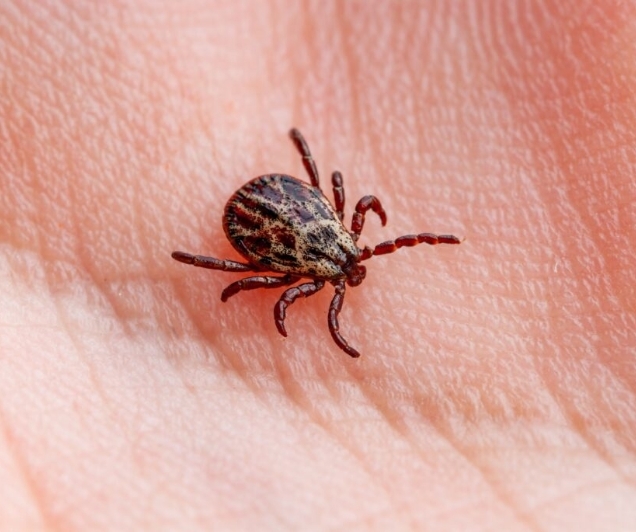
A tick survives on damp, shade, and fallen leaves, and the First Watchung ridge stacks all of it against Montclair’s western edge. Eagle Rock Reservation covers roughly 408 acres of ridge forest that reaches into Montclair, and Mills Reservation adds about 157 acres more of wooded ridge-top. Woodland of that scale, pressed against the estate-section lots, keeps a resident tick population going, and the deer feeding in it are the delivery service that carries those ticks downhill into town.
Essex County has enough of a deer surplus that it runs an annual management cull to spare its forests. That effort takes place at other county reservations, but the takeaway for a Montclair homeowner is straightforward: a heavy deer population works the wooded western side of town, and each animal that steps across a rear boundary can leave ticks in the grass. Lots along the ridge carry that load most, though a wooded corner anywhere in Montclair can shelter ticks of its own.
The reason ticks are worth taking seriously here is the disease they move. New Jersey ran the country’s fourth-highest Lyme rate in 2023, and Essex County records its own share every year, 225 cases in 2023 and 161 in 2024. It is the blacklegged tick, the deer tick, behind nearly all of it, and around half of the adults are infected, so pulling one off a wooded Montclair lot is a genuine health matter rather than a nuisance.
Watch the small ones. The nymph, no bigger than a poppy seed, is out roughly late May into July and drives most human cases, precisely because it is easy to miss and stays on long enough to pass the infection. That stretch overlaps with the season kids and dogs are outside daily. Fewer deer would eventually mean fewer ticks, but a cull trims the herd rather than curing Lyme, so the lever a homeowner actually holds is treating the border the deer cross, and that is where we put the product.

Ticks are a nearly year-round concern on the ridge side of town, and knowing the shape of the year helps you time the defense. The heaviest risk sits in the late-spring-to-July stretch, when the hard-to-spot nymphs are questing. Adults dominate the fall, come back in early spring, and will surface on any thawed winter day. So a ridge-side Montclair yard can produce a tick in almost any month of the calendar.
We weight the treatment toward that spring-summer nymph peak, then keep protection running through the fall wave of adults, so neither of the two windows that carry the most Lyme risk finds the property unprotected.
Tick pressure in Montclair follows the tree cover rather than the postal address. The estate-section properties along the ridge, hard against Eagle Rock and Mills, sit in prime habitat: full canopy, deep beds, stone edging, and summer-long leaf litter, and those are the lots that turn up the most ticks and gain the most from edge work.
Away from the ridge, the tight downtown blocks generally see very little, but nowhere in town is automatically clear. One shaded corner, an ivy bed, a wood pile, or a fence line under trees can hold a pocket of ticks on an otherwise open lot. We walk the ground, locate those micro-habitats, and treat them, instead of writing off an address as low risk on sight.
Thirty-plus years of Northeast tick work, more than 2,400 five-star reviews, and BBB accreditation stand behind the service, and in a town split between packed districts and wooded ridge sections the pressure comes down entirely to how a lot meets the trees. We know the paths deer take off Eagle Rock and Mills and along the residential edges into the yards beneath, so the plan is built on where your ticks actually originate, not a guess.
When the back of the property runs into the reservation or a treeline and you want the kids and the dog outside without a tick check every single time, we shape the treatment to your address and the specific seams putting ticks in the grass.
That same ridge-side woodland sits close to the dense blocks where Montclair breeds its mosquitoes, so plenty of neighbors run the two services together. See our mosquito control in Montclair, or start from the full Montclair pest control plan.

We concentrate on the boundary layer of the property, the strip where mowed grass meets trees, beds, stone walls, and leaf litter, because that is the staging ground where nymphs and adults climb and wait for something to brush past. Treating that band does the real work; soaking the open lawn the ticks never used does not.
Homes near the reservations often deal with fleas on top of ticks, delivered by the same deer, rodents, and stray animals, so our combined tick and flea option settles both in a single visit. It runs on the six-application seasonal plan, 79 to 99 dollars a month by property size, and the Aspenn Protection Assurance covers it: a flare-up between visits brings us back to re-treat at no added cost.
Tell us where the lawn runs into the woods and we will build the plan around that edge.
The western ridge side. Estate-section lots along Eagle Rock and Mills Reservations carry the heaviest load, because the shaded, leaf-covered ground of those woods is what blacklegged ticks need. The packed downtown blocks away from the ridge see far less, though any yard with a wooded corner can hold a pocket.
A real share are. New Jersey placed fourth nationally for Lyme in 2023, Essex County logs cases annually, and roughly half of adult blacklegged ticks are infected. A tick off a wooded Montclair lot deserves to be treated as a genuine hazard.
Eventually a smaller herd means fewer ticks, and Essex does cull because of deer overpopulation, though that work happens at other reservations. Trimming the herd lowers density without curing Lyme, and plenty of deer still cross Montclair’s wooded edge, so treating the border they travel is the step you control now.
Late May through July is the sharp end, when the tiny nymphs behind most cases are active. Adults carry the fall and early spring and appear on mild winter days, so a ridge-side Montclair yard can hand you a tick in nearly any month, which is why we cover the full season.
Rarely. Ticks skip short, sunny grass and stage in the shaded edges, beds, litter, and stone walls where lawn meets woods. We place the product on that harborage instead of the open turf, which is where a tick treatment does its work.
Yes. The wildlife and pets that bring ticks into a Montclair yard bring fleas as well, so we routinely run tick and flea control on one plan and clear both.
Yes, under the Aspenn Protection Assurance. A flare-up between scheduled treatments brings us back for a complimentary evaluation and a re-treatment if needed, at no extra charge.
We treat the whole township, from Upper Montclair and the estate sections to the downtown districts. If your lot backs onto a reservation or a treeline, mention it, since that shapes the treatment. If your area is not named, just call.