
Middletown is a town spotted lanternfly travels to, not one it starts in. The insect is a weak flier that gets around by hitchhiking, and a township wrapped around the Garden State Parkway and the Route 35 and 36 corridors is exactly the kind of place that picks up new arrivals every year. We are Aspenn Environmental Services, and we treat lanternfly where it lands: on the yard trees it feeds on and the trunks it climbs. It will not bite you or your pets, but it drains the trees it swarms and coats everything below in sticky honeydew.
Trace a Middletown infestation back and it usually starts on a road. Egg masses get laid on any flat surface, a trailer wall, a pallet, a car, a piece of patio furniture, and then ride wherever that surface goes. With the Parkway cutting through the township and Route 35 and 36 moving heavy traffic across it, Middletown sits on more of those routes than a town off the network, so it gets a fresh supply each season.
The first trees they land on are almost always tree-of-heaven, the fast-growing invasive that lines roadsides and neglected edges, and the highway corridors here are full of it. From those staging trees the insects fan out into yards. So the properties that get hit hardest in Middletown are the ones near a busy road edge or a stand of tree-of-heaven, and knowing that is half of how we plan the treatment.
Lanternfly hurts a Middletown yard in two ways at once. The feeding is the first: nymphs and adults tap into bark and stems and pull sap, and a heavy swarm on one tree drains it through the season and leaves it weaker going into winter. Ornamentals, fruit trees, and anything young or already stressed feel it most.
The mess is the second, and it is the one most homeowners actually call about. As they feed, the insects rain down honeydew, a sugary excretion that coats the deck, the patio furniture, the cars, and the plants underneath, then grows a black sooty mold and pulls in wasps and ants after the sugar. Clear the feeding population off the trees and both problems ease together, because they come from the same source.

All 21 New Jersey counties are quarantined for spotted lanternfly, Monmouth included, so this is a statewide fight and Middletown is squarely in it. For a homeowner the quarantine is really a moving rule: before firewood, plants, patio furniture, a trailer, or a vehicle leaves the area, check it for egg masses and hitchhiking adults so you are not the reason a new block gets infested next year.
Treating your own trees is the other half of that. Knock the feeders down and scrape the egg masses off your trunks and furniture before winter, and you protect your trees and stop seeding the spread. We can walk the property, show you where the egg masses hide, and treat the live insects on the same visit.
Thirty-plus years across the Northeast, over 2,400 five-star reviews, and BBB accreditation stand behind the work, and we fold lanternfly into the same seasonal plan that covers a wooded Middletown lot for mosquitoes and ticks. We read your actual trees and the stage the insects are in, then treat to match, instead of running the same spray at every house on the same date.
The corridor trees that pull lanternfly in often sit right beside the shaded edges that shelter Middletown’s ticks, so plenty of neighbors bundle the two. Start from the full Middletown pest control plan, or pair this with tick control in Middletown.

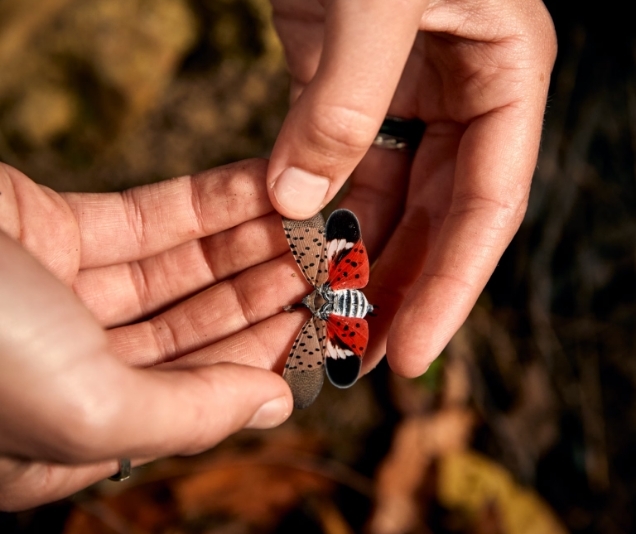
The insect looks different at every stage, and the treatment follows it. Early in the season you get small black-and-white nymphs climbing the host trees; by high summer they are larger and red-marked; from late summer the gray, spotted adults take over and peak into fall before the females lay their overwintering egg masses. We treat the feeding nymphs and adults through the warm months and flag egg masses so the next spring starts from a smaller base. A yard treated two years running tends to turn a corner in the second.
Our work stays on the trees and trunks where the insects gather rather than fogging the whole yard, and we can deal with a tree-of-heaven that is drawing them onto your property.
The plan runs six seasonal applications, 79 to 99 dollars a month by property size, backed by the Aspenn Protection Assurance: a return visit and re-treatment at no extra charge if they come back in force between treatments.
Show us the trees they are swarming and we will match the treatment to the stage they are in.
No. It does not bite, sting, or carry anything harmful to people or animals. The damage falls on your trees and your outdoor space, since the honeydew it drops grows black sooty mold across decks, furniture, and cars.
They rode in. Middletown sits on the Garden State Parkway and Route 35 and 36, and lanternfly spreads by laying eggs on vehicles and gear that then travel. If you have tree-of-heaven or host trees like maple near a busy road edge, your yard becomes a landing spot.
Tree-of-heaven first, then maples, willows, birches, fruit trees, and ornamentals. Young trees and trees already under stress take the hardest hit from steady sap feeding.
Through the feeding season, spring into fall, matched to whether the insects on your trees are nymphs or adults, plus egg-mass work in fall and winter. Two seasons of treatment usually produces the clearest drop.
Sometimes, but not on your own without a plan. Tree-of-heaven is the lanternfly’s magnet, so managing it helps, yet cutting it wrong makes it resprout aggressively, and a few treated ones can even work as trap trees. We will look at what you have and recommend the right move.
Sooty mold on honeydew, the sugar the insects excrete as they feed. It builds up on whatever sits below and fades once the feeding population comes down.
Yes, under the Aspenn Protection Assurance. If they return in force between scheduled visits, we come back for a complimentary evaluation and re-treat if needed at no extra charge.
We treat lanternfly township-wide, from the bayshore villages to Lincroft and the interior, and we pay extra attention to lots near the Parkway and the Route 35 and 36 corridors where the pressure runs highest. If your street is not named, just call.