
Edison is one of New Jersey’s largest and most built-up towns, but tucked between its dense neighborhoods are wooded parks and green corridors where blacklegged ticks make a living. We are Aspenn Environmental Services, based just down the road in North Brunswick, and we treat ticks for Edison homeowners whose yards back onto the treeline, a park, or the greenway. If your property runs up against Roosevelt Park’s woods, the Middlesex Greenway, or the Dismal Swamp’s wooded margins, you have blacklegged tick habitat closer than you might think, and with it the Lyme disease risk those ticks carry.
We will be straight with you about Edison. This is a dense, mosquito-forward town, so tick pressure here is lighter than in the wooded suburbs to the north and the shore towns to the east. The ticks that are here concentrate along the wood edges, and a Menlo Park lot backing onto a wooded park is a different tick situation than an open interior yard in Stelton. We look at where your property meets the trees, then focus the treatment on those transition zones where ticks actually wait for a host.
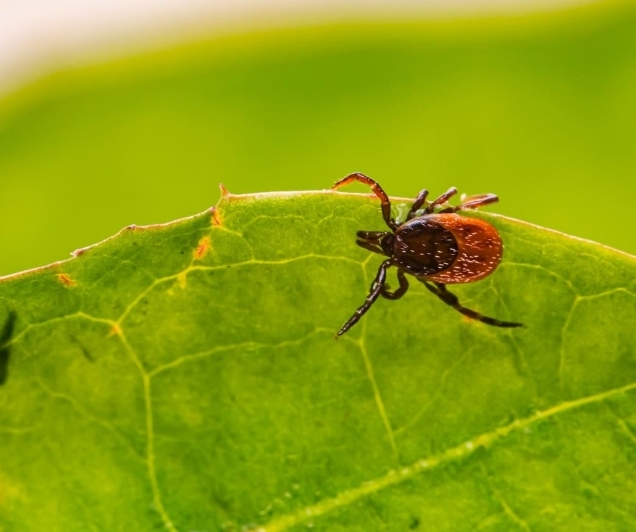
Edison surprises people. It is dense, diverse, and heavily developed, yet it holds real wooded habitat inside its borders. Roosevelt Park carries about 196 wooded acres, and woods that size, right up against neighborhoods, give blacklegged ticks the shaded, humid, leaf-covered ground they need. The Middlesex Greenway runs a wooded corridor through town on an old rail bed, and its brushy tree line is exactly the kind of edge ticks favor. The Dismal Swamp’s wooded and brushy margins add more of the same along the township’s western side.
Here is the honest read for a homeowner. Most of Edison is pavement, close-set housing, and open, sunny lots that hold very few ticks. The pressure sits on the homes whose yards run up against those park woods, the greenway corridor, or a wooded swamp margin, where mature canopy, brush, and leaf litter hold moisture and shelter ticks through the season. If your yard has a wooded rear corner, an overgrown fence line, a wood pile, or an ivy bed, ticks can turn up even on an otherwise developed block. If your lot is open and sunny with no treeline, your risk is genuinely low, and we will tell you so.
New Jersey is a high-incidence Lyme state, running near 69 confirmed cases per 100,000 residents in recent years and posting the fourth-highest case count in the nation in 2023. The tick responsible is the blacklegged tick, Ixodes scapularis, the deer tick, and it is the same species questing along Edison’s wooded park and greenway edges. Middlesex County carries real Lyme cases, and while dense central Edison sees less pressure than a wooded suburb, the risk on a treeline property here is not zero.
Deer are the driver behind tick numbers. Adult female ticks feed and reproduce on deer, and where deer browse the green corridors that connect Roosevelt Park, the greenway, and the wooded margins, tick numbers along those edges climb. Deer move right up to the neighborhoods that border those woods. We cannot change the deer, but we can treat the edges where they travel and where their ticks end up waiting, which is the practical control step for an Edison yard. On an open interior lot with no woods and no deer traffic, there is usually little to treat, and we would rather say that than sell you a service you do not need.

We keep the process clear so you always know what is happening on your property.
We inspect the whole yard, mapping the treeline, greenway edge, beds, leaf litter, and shaded ground where blacklegged ticks quest, with extra attention to any park or corridor exposure.
We identify the tick pressure points and host traffic, since a lot bordering park woods or the greenway needs a different plan than an open interior yard, which may need little or nothing.
We build a treatment matched to your property and explain it plainly, including what we treat, what to expect afterward, and pricing with no surprises.
We treat the edges and harborage, concentrating on the transition zones and shaded ground where ticks wait, rather than blanket-spraying open lawn.
We set a seasonal rhythm that keeps you protected through the spring and summer nymph peak and the fall adult surge, so your yard stays usable across tick season.
Ticks are active across most of the Edison calendar, and timing matters. The riskiest window runs late spring into midsummer, roughly late May through July, when nymphal blacklegged ticks are out. Nymphs are poppy-seed small, easy to overlook, and responsible for most human Lyme cases because they stay attached unnoticed long enough to transmit. That peak lands right when families are using the yard daily and dogs are working the treeline near Roosevelt Park or the greenway.
Adult ticks take the stage in fall and again in early spring, and they will quest on any mild winter day above freezing. For an Edison home on a wooded edge, that adds up to possible tick exposure in nearly any month. We design seasonal programs that hit the spring and summer nymph peak hardest, then hold protection through the fall adult surge, so your property is covered during the two windows that carry the most Lyme risk.
We are a local company based in neighboring North Brunswick, and we have treated ticks across central Middlesex for more than thirty years. We know which Edison streets back onto Roosevelt Park’s woods, which lots sit against the greenway, and how the wooded corridors behave in a wet summer. That local read means we are not guessing at where your ticks are coming from, and it means we will tell you honestly when an open lot barely needs treatment.
Edison homeowners also count on our reputation. Aspenn is BBB accredited and has earned thousands of reviews across our service area for showing up, treating the real problem, and standing behind the work. When your Edison yard borders the woods and you want the family and the dog outside without a tick check every time, we build the plan around your address and the specific edges putting ticks in your grass.
The same wooded, shaded yards that hold ticks often sit near the low ground that breeds mosquitoes, so many neighbors run both together. See our mosquito control in Edison, or start from the full Edison pest control plan.

Our tick work targets the zones where ticks actually live: the treeline, greenway edge, beds, leaf litter, and shaded harborage along your property’s edges. That is where nymphs and adults quest for a host, and that is where a focused treatment does real work. We do not blanket the open lawn that ticks were never using. We treat the perimeter and the shaded edges that put ticks in reach of your family and pets. Many Edison homes near the parks also deal with fleas riding in on the same wildlife and pets that bring ticks, so our combined tick and flea option handles both in one visit.
Homeowners near Edison also read our guides to pest control in North Brunswick and pest control in East Brunswick.
Tell us where your yard meets the woods and we will build the plan around those edges.
Some, in the right spots. Edison holds wooded parks and green corridors inside its borders, including Roosevelt Park’s roughly 196 wooded acres and the Middlesex Greenway. Homes backing onto those woods and brushy edges face real tick pressure, though it is lighter than in the wooded suburbs. Open, sunny interior lots see very few ticks.
Many can. The blacklegged tick, or deer tick, is the species behind almost all Lyme disease in New Jersey, and it is the tick working Edison’s park and greenway edges. New Jersey is a high-incidence Lyme state, so a tick on a wooded Edison lot should be treated as a genuine risk rather than a nuisance.
The highest-risk window is late May through July, when tiny nymphal ticks are active and hard to spot. Adults take over in fall and early spring and will quest on mild winter days. For an Edison home on a wooded edge, that means possible tick exposure in nearly any month, so we treat across the season.
Usually not much. Blacklegged ticks rarely live out in open, sunny turf away from woods. If your lot is open with no treeline, greenway edge, or brushy corner, your tick risk is low, and we will tell you that instead of selling you a treatment. The risk sits on the wooded-edge properties.
Fewer deer generally means fewer ticks over time, because adult ticks feed and reproduce on deer. That is not something a homeowner controls, though. The practical step is treating the wooded edges where deer travel and drop ticks, which is where our work concentrates.
Usually not, because blacklegged ticks rarely live out in open, sunny turf. They quest in the shaded treeline, greenway edge, beds, and leaf litter where your lawn meets woods. We target those harborage zones instead of blanket-spraying open grass, which is where tick treatment actually works.
One treatment knocks the current population down, but ticks reload from nearby park woods, the greenway, deer, and rodents through the season. Most wooded Edison lots do best on a seasonal rhythm covering the spring and summer nymph peak and the fall adult surge. We right-size the schedule to your property.
We treat all of Edison, from Menlo Park and Stelton to Clara Barton, Oak Tree, and Bonhamtown, and we are based just next door in North Brunswick. If you do not see your section listed, just call. Odds are we are already treating near you.