
Ask a Raritan Center tenant where the spotted lanternfly came from, and the honest answer is your own loading dock. Edison moves more freight than almost any town in the state, and this insect cannot fly far, so it arrives the way everything else in Edison arrives, on a truck, a pallet, or a rail car. We are Aspenn Environmental Services, based one town over in North Brunswick, and we treat spotted lanternflies on the trees and trunks where they pile up. It will not bite you or your dog, but it drinks tree sap in swarms and rains sticky honeydew onto everything below, and a handful in July turns into a curtain of them by Labor Day.
Because Edison is a freight town first, we treat it like one. We look at what is staging the insects onto your block, we time the visit to the stage the lanternfly is in, and we point you to the treatment page for the full method behind the work.
Few places in New Jersey handle goods the way Edison does. Raritan Center alone is one of the largest industrial parks on the East Coast, and warehouses, cross-docks, and distribution centers ring the township along the freight lines. That is the whole reason Edison keeps getting reinfested. Lanternfly egg masses ride in on the flat surfaces of trailers, shipping pallets, crates, rail cars, and the goods stacked on them, and a town built to receive freight receives the eggs right along with the cargo.
The rail piece matters just as much. The Northeast Corridor and the freight lines that feed the Port cut straight through, and the yards, sidings, and neglected rail edges collect the tree-of-heaven that lanternfly loves best. From that industrial ground the insects push outward into the residential grid, so a home in Menlo Park or Bonhamtown sitting a few hundred yards downwind of a warehouse lot or a rail siding takes the heaviest pressure. If you back up to an industrial edge, you are on the front line.
Not every Edison street gets hit the same way. The map of pressure follows the freight map. Lots along the Route 1 and Route 27 truck routes, homes near the Metropark and Edison station rail edges, and any property within sight of a warehouse district or an overgrown industrial parcel sit closest to the staging trees. Yards with tree-of-heaven of their own, or with maple, willow, birch, or fruit trees the insects graduate to, become feeding stations once the first arrivals settle in.
When we walk your Edison property, the first thing we do is trace where the pressure originates: the nearest tree-of-heaven, the trunk lines the nymphs are climbing, and the flat surfaces holding egg masses over winter. That read decides the plan. A quiet interior street a mile from any freight edge gets a lighter program than a home backing a distribution lot on the industrial side of town.

We concentrate on the trees and trunks where lanternflies gather, not a blanket spray across the whole yard. We treat the host trees they are climbing and feeding on, deal with egg masses where we find them, and can address a tree-of-heaven that is acting as a magnet on or near your property. Because Edison reloads every year off the freight coming through, we build the plan around repeat pressure, not a one-time knockdown, and a property treated two seasons running usually drops off hard the second year.
New Jersey now sits fully under a spotted lanternfly quarantine, all 21 counties, and in Edison that touches more than the average yard. For a homeowner it is a checklist: look over firewood, potted plants, grills, patio sets, trailers, and vehicles for egg masses before you haul them anywhere. For the warehouses, carriers, and distribution operations that define Edison’s economy, it goes further. Any business moving regulated goods within or out of the zone needs a state permit and is expected to inspect and train for lanternfly, because a single infested pallet can seed a whole new region.
That is where treating your own trees connects to the bigger effort. When you knock down the insects feeding on your property and scrape the egg masses off your trunks and hardscape before winter, you are protecting your own trees and keeping Edison from exporting the problem down the line. We can show you the egg masses hiding on your property during the same visit we treat the feeders.
We work the Edison side of Middlesex constantly, so we already read the township’s pressure the way a local does: the warehouse corridors, the rail edges, the tree-of-heaven staging on industrial ground, and the yard trees the insects jump to next. We are not guessing at your lot. We look at your actual trees, judge the stage, and treat to match, instead of handing every address the same spray on the same date.
More than 30 years in Central Middlesex and thousands of reviews stand behind that. We fold spotted lanternfly into the same seasonal care that covers mosquitoes and ticks on an Edison property. Start from the full Edison pest control plan, or pair this with mosquito control in Edison.

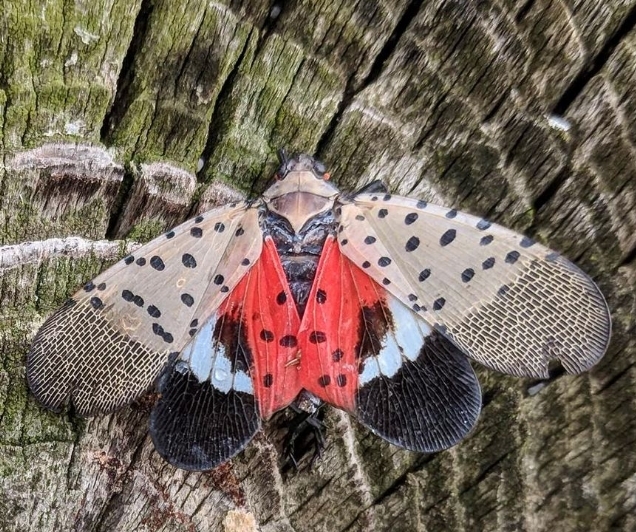
You do not need the full biology lesson here, and we keep the deep version on the treatment page. In plain terms: the pest hatches small and dark in spring, grows through a red-and-black stage over summer, and matures into the familiar gray-and-red winged adult that peaks in fall before laying the next round of egg masses. Each stage climbs and feeds on tree sap, and the honeydew it leaves behind grows a black sooty film on decks, cars, and patio furniture underneath. We match the treatment to whichever stage is active when we arrive.
Homeowners near Edison also read our guides to pest control in North Brunswick and pest control in East Brunswick.
Show us the trees; they are swarming, and we will match the treatment to the season.
Edison is one of the busiest freight and warehouse towns in New Jersey, anchored by Raritan Center and the rail lines, and lanternfly rides in on trailers, pallets, and rail cars every year. Homes near warehouse districts, truck routes, and rail edges feel the pressure first.
No. It does not bite or sting people or pets and it is not toxic. The harm falls on the trees it drains and on your yard, since the honeydew it drops grows a black sooty film across decks, cars, and patio furniture below.
Yes. The industrial edges are where lanternfly stages on tree-of-heaven before spreading into yards. A property near a distribution lot, a rail siding, or an overgrown industrial parcel usually sees heavier numbers, so we weight the plan toward that pressure.
That is sooty mold growing on honeydew, the sugary waste lanternflies leave as they feed. It coats whatever sits below and pulls in wasps and ants. It fades as we bring the feeding population down.
It can. All 21 counties are quarantined, and companies moving regulated goods out of the zone need a state permit and are expected to inspect for lanternfly. In a distribution town that reaches a lot of local operations, not just homeowners.
Sometimes, but not on your own. It is the lanternfly’s favorite host, so managing it helps, yet cutting it badly makes it resprout hard, and a few treated ones can serve as trap trees. We will look at what you have and recommend the right move.
It tracks the insect’s stage. We treat climbing nymphs and adults through the feeding months and address egg masses in fall and winter so the next year starts lower. A property treated across the season, then again the following year, drops the most.
We treat across the township, from Menlo Park and Stelton to Clara Barton, Oak Tree, and Bonhamtown, with extra weight on the warehouse and rail corridors. If your street is not named, call us. We are one town over.