
Start with the Ireland Brook Conservation Area and the rest of East Brunswick tick control falls into place. That preserve, roughly 520 acres of protected woods and edge habitat, is the single biggest reason blacklegged ticks have a permanent home in this town, and the deer ticks that carry Lyme disease pour out of its borders into the neighborhoods that ring it. We are Aspenn Environmental Services, and we treat East Brunswick yards that run up against that preserve and the other wooded parcels scattered across a township that covers a lot of ground.
We do not treat East Brunswick as one uniform place, because it is not one. This is a large township, and a lot backing onto the Ireland Brook preserve is a completely different tick situation than an interior yard three miles away. We look at where your property meets the trees and the brush, then focus the treatment on the transition zones where ticks actually quest for a host instead of spraying grass they never touch.
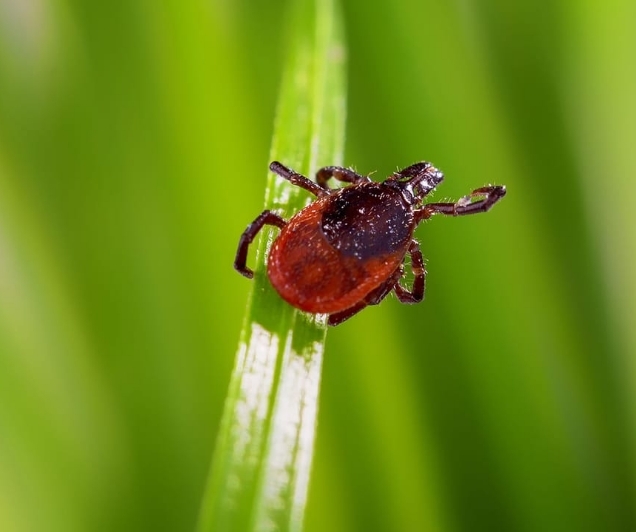
East Brunswick is a big township, and its size is part of the problem. More land means more wooded edge, and more wooded edge means more tick habitat. The Ireland Brook Conservation Area is the centerpiece. About 520 acres of preserved woods and brushy edge, it is precisely the shaded, humid, leaf-covered ground blacklegged ticks depend on, and a protected parcel that large never gets cleared or thinned. It sits there as a standing reservoir, giving ticks a permanent base and giving the deer and rodents that carry them a highway straight into the yards along its perimeter.
The preserve is not the only wooded parcel, either. Other open-space tracts and tree-lined greenways push the tick habitat further into the residential grid across Brookview, Orchard Heights, and Westons Mills. Add large, mature-canopy lots with thick ornamental beds and a resident deer herd that little suburban hunting ever thins, and East Brunswick has the classic setup for heavy blacklegged tick pressure right at the property line. The deer that step out of the preserve at dusk drop next season’s ticks in the backyards they cross.
New Jersey is a high-incidence Lyme state, running near 69 confirmed cases per 100,000 residents recently and posting the fourth-highest case count in the country in 2023. The tick behind nearly all of it is the black-legged tick, Ixodes scapularis, the deer tick, and it is the same species working the Ireland Brook preserve edges and the wooded lots of East Brunswick. Middlesex County carries genuine Lyme cases, and on a property that borders that preserve, the risk is concrete, not abstract.
Deer are what turn a wooded edge into a tick factory. An adult female tick feeds and mates on a deer, then drops off to lay thousands of eggs, so wherever deer browse freely, tick numbers rise. They move constantly through the Ireland Brook preserve and the town’s other tracts, carrying ticks right up to the yards that border them. East Brunswick runs no formal county cull, so those deer keep seeding the preserve edges year after year. We cannot change the deer, but we can treat the edges they travel and where their ticks wait for the next host, which is the practical lever a homeowner here actually controls.

There are no surprises in how we run a job, and here is the order it usually follows.
We walk the whole lot on foot and note every preserve edge, treeline, brush pocket, bed, and leaf-litter zone where blacklegged ticks stage, paying close attention to wherever your property touches the Ireland Brook preserve or another wooded tract.
We read the host traffic, the trails and browse signs that show how deer and rodents move in from the woods, since a preserve-border lot needs a heavier hand than a sheltered interior yard.
We lay out what we will treat, what to expect afterward, and what it costs, in plain terms and with the price settled before we start.
We put the product where the ticks actually are, the perimeter, the shaded harborage, and the transition ground, and we leave the open lawn alone.
We set a return cadence that carries you through the nymph surge of late spring and summer and the adult wave in fall, so the yard stays livable the whole season.
Where you sit relative to the preserved woods is what decides your tick pressure. Sections like Brookview, Orchard Heights, and Westons Mills each sit differently against the tree cover, and the ticks track the woods, not the street sign. The large, mature-canopy lots that border the Ireland Brook Conservation Area, or any of the town’s other wooded parcels, are the classic blacklegged tick setting: heavy shade, thick beds, stone edges, and leaf litter that holds moisture through the summer. Those are the properties where we find the most tick activity and where perimeter and edge treatment pays off most.
More open, sunny interior lots away from the preserved woods generally see lighter pressure, but no East Brunswick yard is automatically safe. A single wooded corner, an ivy bed, a wood pile, or a fence line against trees can host ticks even on a tidy lot. We walk your specific property, find those micro-habitats, and treat them, rather than assuming your risk from the neighborhood around you.
We are a local company based in neighboring North Brunswick, a short hop up Route 18, and we have treated ticks across this stretch of Middlesex County for more than thirty years. We know which East Brunswick streets border the Ireland Brook preserve, which sections sit against the town’s other wooded tracts, and how those edges behave in a wet June. In a township this size, that local knowledge means we are not guessing at where your ticks are coming from.
The reputation matters too. Aspenn is BBB accredited, and thousands of reviews across our service area come down to the same thing: we show up, we treat what is actually wrong, and we stand behind it. If your property runs against a preserve and you are tired of running a tick check every time the kids and the dog come back inside, we scope the plan to your exact address and the specific edges seeding ticks into your grass.
The same wooded lots that hold ticks often sit near the standing water that breeds mosquitoes, so many neighbors treat both. See our mosquito control in East Brunswick, or start with the full East Brunswick pest control plan.

Everything we do here is built around the preserve edge and the wooded parcel borders, because that is where East Brunswick ticks concentrate. We treat the treeline, the brush, the beds, the leaf litter, and the shaded harborage that runs along your perimeter, since that band is where nymphs and adult ticks climb up and wait for something warm to brush past. An open, sunny lawn is not where they live, so it is not where we waste product. The goal is a treated buffer between the preserved woods and the part of the yard your family and pets actually use.
Fleas usually travel the same route as the ticks, hitching in on the deer, rodents, and pets crossing over from the preserve, so plenty of preserve-adjacent East Brunswick homes ask us to handle both in a single visit through our combined tick and flea option. A property with trees also tends to draw spotted lanternfly in season, which we can knock down on the same trip. Exact service scope and pricing are set after we see your property.
We treat the towns around East Brunswick too. See pest control in North Brunswick and pest control in Edison.
Tell us where the yard meets the woods, and we will build the plan around those edges.
Yes, and it is the biggest single factor in town. The preserve is roughly 520 acres of protected woods and brushy edge, a permanent reservoir of blacklegged tick habitat, and it carries the deer and rodents ticks feed on. Lots that border it get the heaviest, most concentrated pressure. We focus treatment on the transition zones where the preserve edge meets your lawn, since that is where ticks quest.
Beyond the Ireland Brook preserve, the town’s other preserved and wooded parcels and tree-lined greenways all create edge habitat, and the mature-canopy lots that border them see the most activity. This is a large township, so pressure varies a lot by section. Open interior lots usually see less, though any yard with a wooded corner can host ticks.
A good share of them are. The blacklegged tick, the one people call the deer tick, accounts for nearly all Lyme disease in New Jersey, and it is precisely the species that works the Ireland Brook preserve edges and the wooded East Brunswick lots. Since the state ranks high for Lyme incidence, any tick pulled off a wooded property here deserves to be taken seriously.
The dangerous stretch is roughly late May into July, when the barely visible nymphs are questing. Adults then dominate the fall and early spring and will surface on a mild winter day. Living against the preserve or another wooded tract, you can realistically encounter a tick in almost any month, which is why our coverage spans the season rather than a single spray.
Over the long run, yes, since adult ticks rely on deer to feed and breed, so fewer deer eventually means fewer ticks. But East Brunswick runs no formal county cull, and even a smaller herd only lowers tick density rather than erasing Lyme risk. The move a homeowner can actually make today is treating the wooded edges the deer file through on their way out of the preserve.
Not necessarily. Blacklegged ticks avoid short, exposed turf, so the open middle of your lawn is genuinely low risk, but the shaded preserve edge, the treeline, the beds, and the leaf litter along the border are another story. Those margins are where the ticks stage, and those margins are what we treat.
One visit drops the current population hard, but the preserve, the deer, and the resident rodents keep restocking it as the season rolls on. That is why most preserve-adjacent East Brunswick lots do best on a repeating schedule that spans the late-spring nymph peak and the fall adult wave. We match the number of visits to how exposed your particular lot is.
We treat all of East Brunswick, from Brookview and Orchard Heights to Westons Mills, reachable off Route 18 and the County Route 527 and 535 corridors, with Turnpike Exit 9 anchoring the north end. We are based just next door in North Brunswick. If you do not see your section listed, just call. Odds are we are already treating ticks near you.