
Grubs are the one Middletown pest that lives on the sunny side of the yard. While ticks hide in the shaded edges, white grubs work the open, watered lawns of the interior, and the tidier and greener the turf, the more the beetles like it as a nursery. We are Aspenn Environmental Services, and grub control here is won or lost on timing: hit the early-summer window and the damage never starts; miss it and you are reseeding brown patches in September.
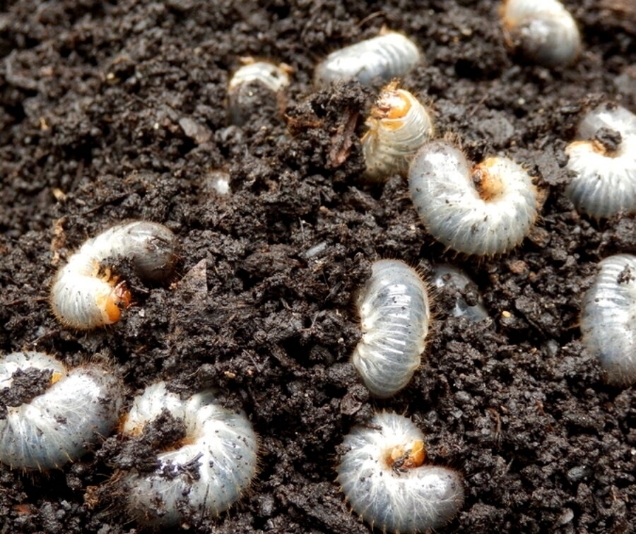
A grub problem takes the lawn twice. First from below: the larvae sit in the soil and eat the grass roots, so the turf loses its anchor and browns out no matter how much you water, then lifts in sheets when you pull it. On Middletown’s open interior lawns, that shows as spreading brown patches through late summer.
Then from above: skunks, raccoons, and crows dig for the grubs, and a good population can leave a smooth lawn torn up after a few nights of animals rooting for the larvae. The digging is often the louder alarm, because the wildlife finds the grubs before most homeowners do. Both kinds of damage stop once the grub count comes down.
Beetles lay their eggs in sunny, irrigated grass, which is exactly what the interior neighborhoods away from the woods provide. A lush, watered Middletown lawn is more attractive to an egg-laying beetle than a patchy one, so the best-kept yards can pull the most eggs, which surprises people. Homes across the interior that run sprinklers through July sit right in the target zone.
Last season is the other tell. Beetles come back to turf that worked for them, so a lawn that had grubs or nighttime digging last year is likely to see them again, and if a neighbor is fighting skunk damage, the same beetles are probably working your block. We build last season into this season’s plan.

Prevention leads. We time the application to the June-into-July egg-lay and the young-grub stage, water it in so it reaches the root zone, and account for the beetle mix on your turf. If the damage has already started, we look at it and tell you straight whether a late treatment still helps or whether the worst patches need reseeding, rather than selling a rescue as a cure.
More than 30 years on Northeast lawns, over 2,400 five-star reviews, and BBB accreditation stand behind the work, and with grubs the whole job is timing. We treat in the window that counts, we water it in, and we watch for the species that beat the wrong product, which is the difference between green turf in September and a peeling brown lawn.
Grubs travel with the other yard pests we cover, and the same lawns often push ants toward the house, so many neighbors take the two together. Pair this with ant control in Middletown , or start from the full Middletown pest control plan.

New Jersey lawns get white grubs from several beetles, with the oriental beetle the most common here, plus the Japanese beetle, the Asiatic garden beetle, and the northern masked chafer. They run on one rhythm: adults lay eggs in the turf through June and July, the eggs hatch into small grubs that feed near the surface through late summer, and that late-summer feeding is when the brown patches appear.
Prevention lands in that narrow early-summer slot, late June through mid-July, when the grubs are young and shallow. The one detail that decides whether it works is watering it in, so the product moves down through the thatch to where the grubs feed; left dry on top it does almost nothing. By late August the grubs are big and hard to reach, so a treatment then is a rescue, not prevention, and one beetle, the masked chafer, resists some products that handle the rest, which is why we match the treatment to the lawn.
The plan runs six seasonal applications, 79 to 99 dollars a month by property size, backed by the Aspenn Protection Assurance: a return visit and re-treatment at no extra charge if trouble shows up between treatments.
Tell us what your lawn is doing and we will time the treatment to beat the damage.
Brown patches in late summer that stay brown despite watering are the first sign. Tug the turf, and if it lifts like a loose carpet because the roots are gone, and you find white C-shaped larvae in the soil, grubs are the cause. Overnight digging by skunks or raccoons is the other tell.
Late June through mid-July, when the beetles are laying and the young grubs sit near the surface. Treating then and watering it in is far more reliable than waiting for the damage to show in late August or September.
Skunks, raccoons, and crows dig for grubs as food. If the digging turns up in late summer and you find grubs in the soil, they are the target. Bringing the grub count down takes away the reason the animals keep tearing the lawn.
Sometimes, but that is a rescue rather than prevention. A late treatment can stop further feeding, though badly damaged turf may still need reseeding, and results are less certain than treating early. We look at it and give you the honest read.
Not every lawn does, but sunny, watered interior lawns are prime egg-laying turf and beetles move in from nearby yards. If a neighbor had grubs or skunk digging, your risk is up. We help you weigh it for your specific lawn.
It has to travel down through the thatch to the root zone where the young grubs feed. Water carries it there. Dry on the surface it never reaches them, which is why so much store-bought grub control fails.
Yes, under the Aspenn Protection Assurance. If grub trouble shows up between scheduled treatments, we return for a complimentary evaluation and re-treat if needed at no extra charge.
We treat lawns township-wide, most often on the open interior yards around Lincroft and the residential neighborhoods. If your street is not named, just call. We are already working Middletown.