
Middletown’s tick problem lives in its interior. Away from the bayshore, the township turns wooded and rolling, and the county parks around Lincroft hold a real deer herd, which means a lot of Middletown homes back onto blacklegged tick habitat closer than they realize. We are Aspenn Environmental Services, tick and flea control is one of our core services, and we treat the shaded edges where these ticks actually wait so your family and dog can use the yard without carrying one back inside.
If your property runs up against Hartshorne Woods, Huber Woods, Thompson Park, or any wooded rear corner, you have deer-tick habitat on your fence line, and with it the Lyme disease risk those ticks carry. That is exactly where we focus the treatment.
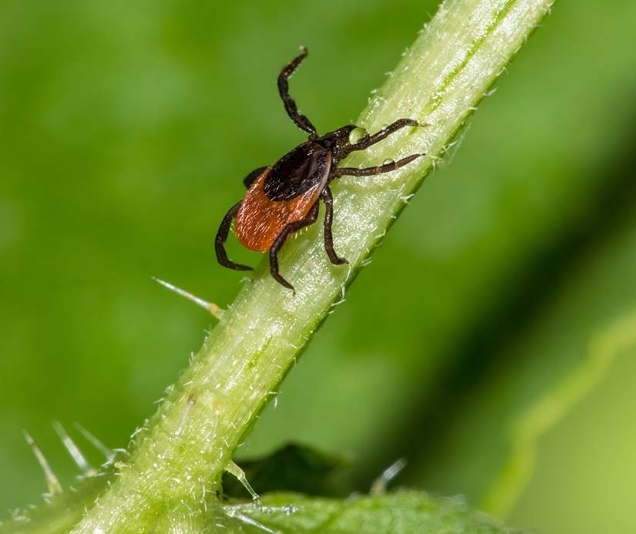
Blacklegged ticks need shade, humidity, and leaf litter to survive, and the wooded interior of Middletown gives them all three. The county parks are the anchor. Hartshorne Woods runs to roughly 800 acres of hilly forest overlooking the Navesink River, Huber Woods adds about 390 acres in the Navesink Highlands, and Thompson Park in Lincroft covers another 677 acres. Blocks of woods that size, sitting right against neighborhoods, hold a permanent tick population and the deer that move it around.
Deer are the engine. Monmouth County runs a deer management program specifically because the herd is large enough to strain the forest, and Hartshorne Woods and Thompson Park are both managed hunt areas. Over 15 years that program has removed thousands of deer, which tells you how many are moving through the interior. Every one of them that browses out of the parks and along a wooded residential edge can drop ticks into a backyard. The deer that cross your rear property line at dusk are the same ones seeding the grass with next season’s ticks.
New Jersey is a high-incidence Lyme state. It posted the fourth-highest Lyme case rate in the country in 2023, and Monmouth County is named among the state’s hot spots. The tick behind almost all of it is the blacklegged tick, the deer tick, and it is the same species working Middletown’s wooded edges. Roughly half of adult blacklegged ticks and a quarter of the nymphs carry the Lyme bacteria, so a tick off a wooded lot here is worth treating as a real hazard, not a passing annoyance.
The nymphs are the ones that matter most. About the size of a poppy seed, they are out from May through July and cause the majority of human Lyme cases because they stay attached unnoticed long enough to transmit. That window lands right when kids are barefoot in the grass and dogs are working the tree line daily. We cannot change how many deer move through Middletown, but we can treat the yard edges they travel, which is the practical control step you actually hold. A note on honesty: managed deer hunts lower tick density over time, but they are not a Lyme cure, so we treat the edges that put ticks in reach of your family rather than relying on the herd being thinned.

Ticks stay a problem here for most of the year, and reading the rhythm helps you time the defense. The sharpest risk runs from late spring into midsummer, roughly late May through July, when the nymphs are out and easy to miss. The adults then take over in the fall, return in early spring, and will climb a grass blade on any mild winter afternoon. So a Middletown yard near the parks or a wooded edge can produce a tick in nearly any month.
We front-load the treatment on the late-spring and summer nymph window, then carry protection into the fall adult surge, so the two peaks that matter most never catch your property unguarded.
We have treated ticks across the Northeast for more than 30 years, with over 2,400 five-star reviews and BBB accreditation behind us. That experience matters on a township like Middletown, where the tick pressure depends entirely on how your lot meets the woods. We know how the deer move out of Hartshorne Woods and Thompson Park and along the residential edges, so we are not guessing at where your ticks come from.
When your yard backs onto the interior woods and you want to send the kids and the dog outside without a tick check every single time, we build the plan around your address and the specific edges that put ticks in your grass.
The same wooded interior that holds ticks sits close to the bayshore that breeds Middletown’s mosquitoes, so many neighbors treat both. See our mosquito control in Middletown, or start from the full Middletown pest control plan.

Our work zeroes in on the transition zones on your property, the seams where the mowed lawn gives way to woods, beds, stone walls, and leaf litter. That is where nymphs and adults perch and wait for a host, so that is where a targeted treatment pays off. We treat the perimeter and the shaded harborage instead of soaking the open lawn the ticks were never using.
Many Middletown homes near the parks fight fleas too, carried in by the same wildlife and pets that bring the ticks, so our combined tick and flea option clears both in one visit. The work runs on a seasonal plan of six applications, from 79 to 99 dollars a month by property size, and it is backed by the Aspenn Protection Assurance: if ticks flare up between treatments, we come back and re-treat at no extra charge.
Tell us where the yard meets the woods and we will build the plan around those edges.
In the wooded interior. Lots around Lincroft and the neighborhoods backing onto Hartshorne Woods, Huber Woods, or Thompson Park carry the most pressure, because blacklegged ticks need the shaded, leaf-covered ground those woods provide. The bayshore villages generally see less, though any yard with a wooded corner can host ticks.
A fair number do. Roughly half of adult blacklegged ticks and a quarter of the nymphs carry the Lyme bacteria, and it is the same species working Middletown’s wooded edges. With New Jersey ranking fourth in the country for Lyme in 2023 and Monmouth named a hot spot, a tick off a wooded lot here is worth treating seriously.
Over time a smaller deer herd means fewer ticks, and Monmouth does run managed hunts at Hartshorne Woods and Thompson Park. But thinning deer lowers tick density rather than removing Lyme risk, and plenty of deer still move through the interior. The step you control now is treating the yard edges the deer travel.
Late May through July is the peak, when the tiny nymphs are out and cause most Lyme cases. The adults then run the fall and early spring and surface on mild winter days. A wooded Middletown yard can hand you a tick in nearly any month, which is why our coverage spans the whole season.
Usually not. Blacklegged ticks avoid short, sunny turf and stage in the shaded edges, beds, leaf litter, and stone walls where the lawn meets woods. We put the product on those harborage zones instead of soaking the open grass, which is exactly where a tick treatment does real work.
Yes. The same wildlife and pets that carry ticks into a Middletown yard bring fleas too, so we commonly run tick and flea control together and clear both in one plan.
Yes. It is backed by the Aspenn Protection Assurance. If ticks flare up between your scheduled treatments, we return for a complimentary evaluation and re-treat if needed at no extra charge.
We treat the whole township, from the interior neighborhoods around Lincroft and the county parks to the bayshore villages. If you back onto a park or a wooded edge, tell us, because that changes how we treat. If you do not see your area named, just call.